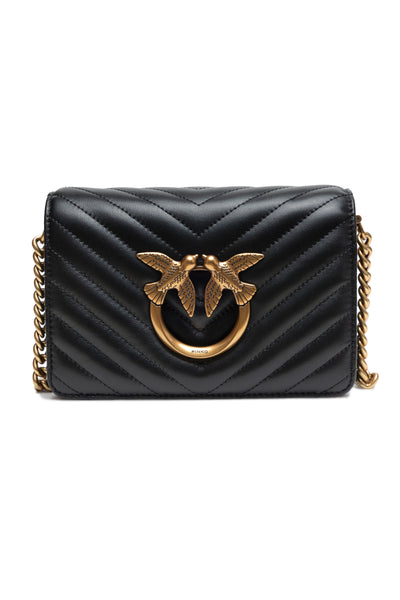
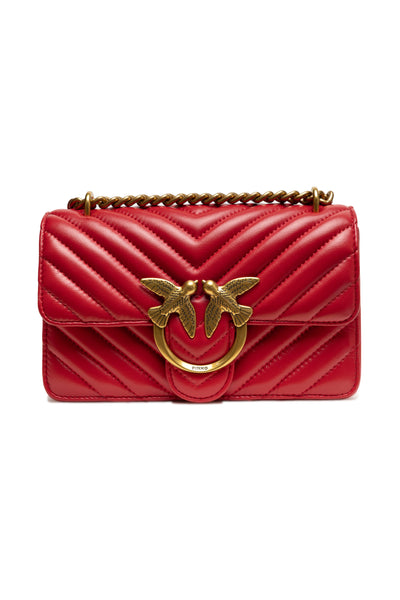





A bag is the most visible object a person carries. It sits at the hip, under the arm, or on the shoulder for hours at a time. It is seen by everyone the wearer passes on a given day. It accumulates the evidence of a life: the scuff from the restaurant chair, the patina from the oils of the hand that reaches for it fifty times a day, the faint wear at the corners where it has been set down on a thousand surfaces.
A bag bought for a season looks wrong by the following one. A bag bought for a decade looks better at year five than it did on day one. The difference is not the price. It is the decision to buy the bag that was built to outlast its first owner.
The Leather Test
The first question to ask of any bag is what it is made from. Full-grain leather is the top layer of the hide, with the natural grain intact. It has not been sanded or corrected. It carries the marks of the animal's life: insect bites, scratches, variations in texture. These are not flaws. They are evidence that the leather has not been processed into uniformity. Full-grain leather develops a patina. It darkens at the points of contact. It absorbs oils from the hand and polishes itself over time.
Top-grain leather has been sanded to remove imperfections. It is smoother and more uniform than full-grain, and it will not develop the same depth of character. It is the choice of houses that prioritise consistency over personality. Genuine leather, the lowest grade used in wearable goods, is a composite of leftover layers bonded together and painted to look like the real thing. A bag made from genuine leather will look worse with age, not better. It is the bag that was built to be sold, not to be kept.
The Houses That Build to Last
Hermes builds the Birkin and the Kelly by hand, one bag per artisan, over the course of eighteen to twenty-four hours. The leather is cut from a single hide to ensure colour consistency across every panel. The saddle stitch, executed with two needles and a single length of waxed linen thread, is stronger than a machine lockstitch. If one stitch breaks, the seam does not unravel. The bag is assembled, stitched, turned, and finished by one person whose initials are recorded in the house's archive. A Birkin is not a bag. It is an event that occurred in a specific atelier on a specific date, executed by a specific pair of hands.
Bottega Veneta builds the Intrecciato weave bags, including the Jodie and the Cassette, in its atelier in Montebello Vicentino. The intrecciato technique, introduced in the 1960s when the house's sewing machines were too thin to work with the thick leather Bottega wanted to use, weaves strips of nappa leather into a textile-like surface. The weave is structural, not decorative. It distributes stress across the entire surface of the bag, which means the bag wears evenly and lasts longer than a bag built from flat panels.
Ferragamo, founded in Florence in 1927, brings an architect's eye to bag construction. The Gancini buckle, inspired by the wrought-iron gate of the Palazzo Spini Feroni where the house is headquartered, appears across Ferragamo's bag collection. A Ferragamo bag in smooth calfskin with a Gancini closure is the bag for the woman who wants something recognisable at ten paces and interesting at two. The hardware is polished by hand. The leather is sourced from the same Tuscan tanneries that supply the house's shoes. The object is consistent. The experience of picking it up, opening it, and setting it down feels deliberate.
The Decision
A bag that stays is a bag that was chosen with the same intention applied to a watch or a piece of jewellery. It should work with most of what the wearer already owns. It should be large enough to carry the essentials and small enough to carry without effort. It should be made from leather that will look better in ten years than it does today. If the bag is bought to match one outfit or one season, it will be out of rotation before the leather has had time to break in.
The bag that stays does not announce itself. It does not carry a logo large enough to read from across the street. It communicates quality through the way it sits, the way it closes, and the way it ages. The person who recognises the house already knows. The person who does not simply registers an object that was clearly built with care.
For the bags, leather goods, and accessories referenced here, browse the Women's collection and the Accessories collection at The Gray Crab.