
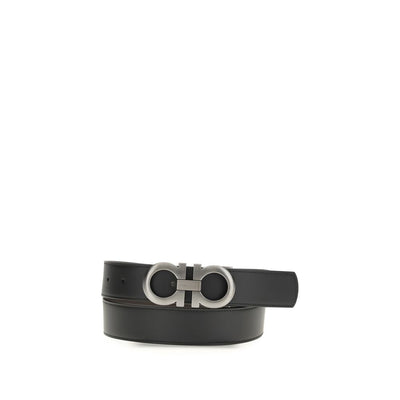


A belt occupies little space and an important position. It sits at the centre of the body, interrupts the trouser line and often becomes the point where leather, metal and tailoring meet.
Start with the leather surface
Full-grain leather retains the natural outer surface. Corrected leather may be sanded, coated or embossed for uniformity. Neither label alone guarantees a good belt.
Look for sufficient body, a convincing surface and a finish appropriate to use. Bend the belt gently and inspect existing holes for cracking or weak coating.
The edge is a construction report
Some belts are cut from a substantial strip. Others are layered, stitched and finished with edge paint. Both can be correct when executed cleanly.
Look for even edges, controlled stitching, secure bonding and no lifting between layers. Tip and buckle fold deserve particular attention because they are handled constantly.
Buckle scale changes formality
A restrained single-prong buckle usually travels most easily through tailoring and business dress. Larger plaques and sculptural hardware make the belt more specific.
Check attachment, pin movement and whether the leather folds cleanly around the hardware.
Width is a proportion decision
The belt must fit the loops and visual weight of the clothing. Narrower belts generally sit more naturally with tailored trousers; broader belts can suit denim and heavier casual cloth. The actual garment loops remain the final authority.
Fit should allow ordinary variation
The working hole should ideally sit near the middle of the available range, leaving room for changes in trouser rise, fabric thickness and ordinary body fluctuation.
Colour should connect the wardrobe
Black and dark brown remain broad foundations. Oxblood adds warmth to navy, charcoal, cream and brown. Graphite and deep navy can work in more specific wardrobes. Exact shoe matching is unnecessary, but leather tone and formality should relate.
Search questions answered
What makes a designer belt worth buying? Material, edge construction, hardware, correct width, useful colour and repeated wear.
Should a belt match the shoes exactly? No. They should share a compatible formality and leather family.
How should a belt fit? Ideally near the middle hole, with enough tail to pass through the keeper without excessive excess.
Shop the belt note
Browse Belts and Accessories.
THE GRAY CRAB view
A strong belt closes the line of the wardrobe and survives repetition without needing recognition to justify it.